Loading...
Serving Redwood City, CA and surrounding areas. (650) 587-4680
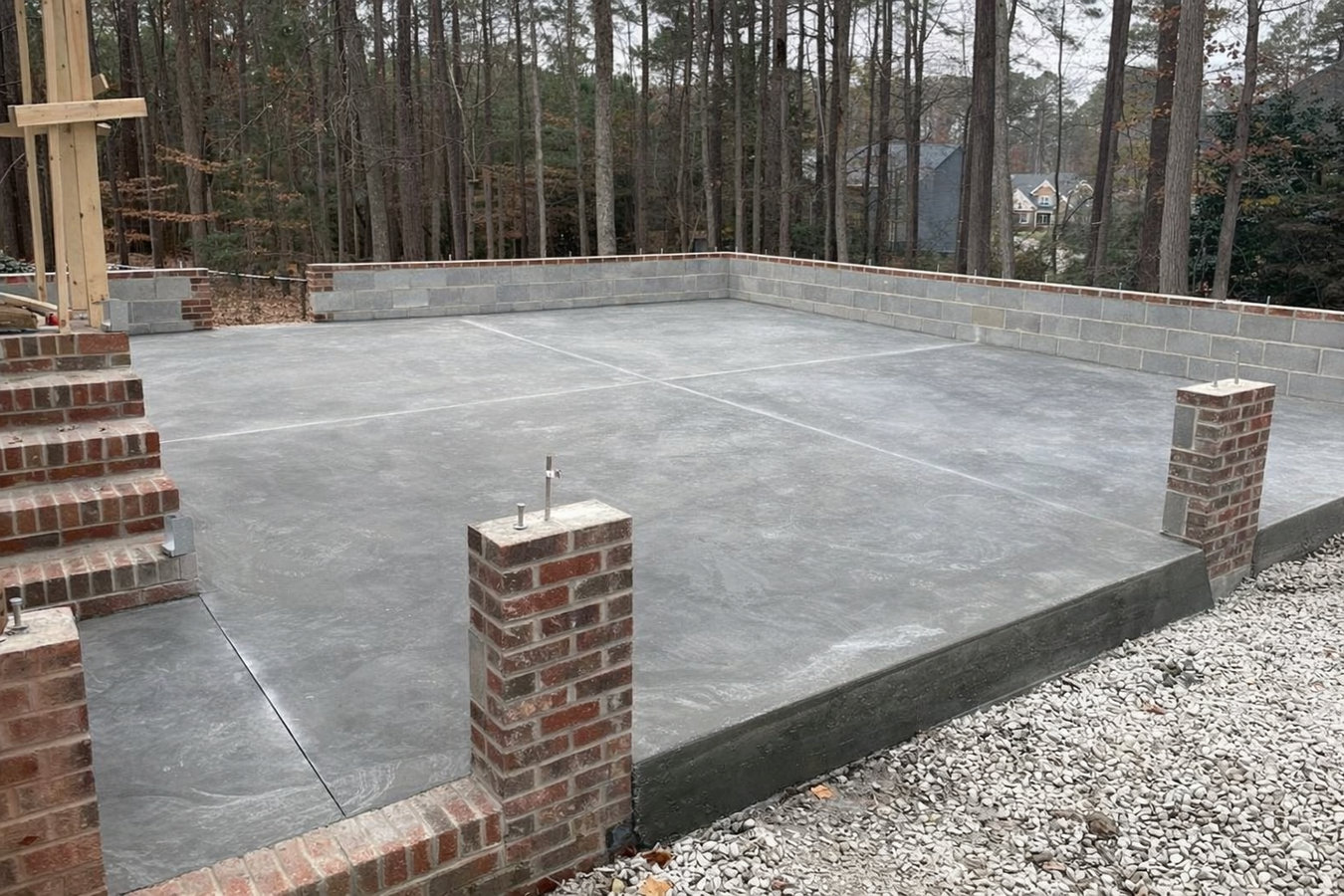
Planning a new home, ADU, or garage on your Redwood City property? We pour concrete slab foundations designed for Bay Area clay soils and seismic conditions, with full city permits and inspections handled from the start.
Slab foundation building in Redwood City involves excavating and leveling the ground, compacting a gravel base, installing steel reinforcement, and pouring a single concrete slab that becomes both your structure's floor and foundation, most residential projects take two to five days of active work with permit approval and curing time extending the full timeline to four to six weeks.
For homeowners building a new structure - whether it is a full home, an ADU, or a detached garage - the slab foundation is the first permanent part of the project that goes in. Once it is poured, you will not see the gravel base, the vapor barrier, or the steel reinforcement ever again. That is exactly why these hidden steps have to be done right the first time. A poorly prepared base or improperly placed steel is impossible to fix once the concrete sets.
Many slab projects happen alongside other site work. If you are also planning retaining walls or footings for other structures, our foundation installation service handles a range of foundation types beyond slabs.
If you are adding a new home, garage, ADU, or workshop on your lot, you need a slab foundation before any framing can begin. This is the most straightforward reason to call a concrete contractor - there is no existing foundation to repair or replace, just a new one to build right from the start. In Redwood City, where ADU construction has surged in recent years, this is the most common reason homeowners reach out.
Small hairline cracks in a concrete floor are common and usually harmless. But if you notice cracks wider than about a quarter of an inch, cracks that run diagonally across a corner, or cracks where one side sits higher than the other, those are signs the slab may be moving or settling unevenly. In Redwood City's clay-heavy soils, this kind of movement is more common than in areas with more stable ground.
When a slab shifts, the walls above it shift too - and one of the first things homeowners notice is that interior doors suddenly stick or no longer latch properly, or that windows become hard to open and close. This is not always a foundation issue, but if you notice it happening in multiple rooms at the same time, it is worth having a concrete contractor take a look. In older Redwood City homes built on clay soils, this symptom often appears after a particularly wet winter.
Sometimes homeowners discover foundation problems not because they noticed symptoms themselves, but because a contractor doing other work - a kitchen remodel, a bathroom addition - spots something during the project. If a licensed contractor or home inspector has told you that your slab is inadequate, cracked through, or was never properly permitted, that is a clear signal to get a concrete contractor involved before the project goes any further.
We build concrete slab foundations for new residential structures, accessory dwelling units, garages, and workshops. Every project starts with site grading and soil assessment, followed by compacting a gravel base, installing a vapor barrier and steel reinforcement, and pouring a finished slab to the thickness and specifications your local soil and building code require. We handle the permit application through Redwood City's Community Development Department and coordinate city inspections at the required stages.
Foundation work often overlaps with other structural concrete projects. If you are also building supporting structures or perimeter walls, our foundation installation service covers a full range of foundation types beyond slabs. For projects that require separate footing structures, our concrete footings service handles those independent foundation elements.
Best for ground-up new construction, poured on a prepared site with full structural steel and designed to support your home's full weight for decades.
Suited to accessory dwelling unit construction on existing properties, sized and reinforced for the specific ADU footprint and local permit requirements.
Ideal for detached garage or workshop buildings, designed to handle vehicle loads and daily use without cracking or settling over time.
The right choice for properties with known expansive clay conditions - we adjust thickness, reinforcement, and base prep to match your site's soil behavior.
Redwood City sits on clay-heavy soil that expands when it absorbs winter rain and shrinks when it dries out during the long Bay Area summer. That seasonal movement is a leading cause of foundation cracking on the Peninsula, and it is why we assess your specific lot's soil conditions before finalizing the slab design - not after. Redwood City also sits in one of the most seismically active regions in the country, close to both the San Andreas and Hayward faults. California's building code requires that new slab foundations here be designed to handle ground movement from earthquakes, which means more steel reinforcement and specific engineering requirements compared to states with lower seismic risk.
We serve slab foundation projects across San Mateo County, including regular work in San Carlos and Belmont, where the same clay soil and seismic conditions apply. Redwood City's ADU-friendly policies have made it one of the more active Bay Area cities for accessory dwelling unit construction - and for most ADU projects here, a slab foundation is the most cost-effective and code-compliant choice.
Tell us the size of your planned structure and whether you have already pulled a permit or spoken to the city. We will schedule a site visit to assess your lot's slope, soil, and access for concrete trucks - all of which affect the price and timeline.
During the site visit, we measure the area, assess the soil, and review any existing structures or utilities that need to be worked around. Then we provide a written quote that breaks down labor, materials, permit fees, and timeline. Most quotes are ready within a few days of the visit.
We apply for a building permit through Redwood City's Community Development Department before any ground is broken. Permit processing typically takes one to three weeks for a straightforward residential slab. Once approved, we schedule the work and notify you of the start date.
We prepare the site, pour the slab, and coordinate the city inspection before the project is closed out. The concrete needs about a week before framing can begin, and full strength takes roughly 28 days. We provide you with the signed permit card and any documentation you need for your records.
We handle the permit, the soil prep, and the city inspections - you get a foundation built to last.
(650) 587-4680Clay-heavy ground in many Redwood City neighborhoods moves with the seasons, and a slab that was not designed for that movement will show it within a few years. We account for local soil conditions before a single form is set - so your foundation stays level through wet winters and dry summers.
Living near the San Andreas Fault means your foundation needs to do more than just hold weight - it needs to flex with the ground during a seismic event. Your slab is reinforced and engineered to meet California's seismic requirements, giving you one less thing to worry about when the next big shake comes through the Peninsula.
Every new slab foundation requires city inspections at key stages - before the pour and after. An independent city inspector, not just your contractor, signs off on the work before it is locked in. You get documentation you can show a future buyer, an insurance company, or a lender - proof that the job was done to code. Visit the California Contractors State License Board to verify any contractor's license before you hire.
Redwood City has made it easier than most Bay Area cities to add an ADU, but the foundation is still the step that can hold everything else up if it is not handled correctly. We know the local permit process, we know what Redwood City inspectors look for, and we keep your project moving so your ADU is ready to rent or for family on the schedule you planned.
A slab foundation is the part of your home you will never see again once the walls go up - which is exactly why it has to be right the first time. We do not cut corners on the steps that are invisible: the gravel base, the moisture barrier, the steel placement. Those are the things that determine whether your foundation lasts 10 years or 50. Before you hire anyone, verify their license on the CSLB site and ask any concrete slab contractor how they handle the base prep and what inspection stages they coordinate.
Install new residential foundations, including raised foundations with crawl spaces and full basement work.
Learn MorePour structural concrete footings that support walls, posts, and columns for new construction and additions.
Learn MorePermit season fills up fast - lock in your start date before the summer rush.